> For the complete documentation index, see [llms.txt](https://book.thedatascienceinterviewproject.com/llms.txt). Markdown versions of documentation pages are available by appending `.md` to page URLs; this page is available as [Markdown](https://book.thedatascienceinterviewproject.com/excel/python-in-excel.md).
# Python in Excel
Anaconda and Microsoft announced a groundbreaking innovation: Python in Excel. This marks a transformation in how Excel users and Python practitioners approach their work.
### `All You Need Is =PY()`
Using Python in Excel is as simple as typing “=PY(” in your Excel cell, followed by your Python code. The results of your Python calculations or visualizations will then appear in your Excel worksheet.
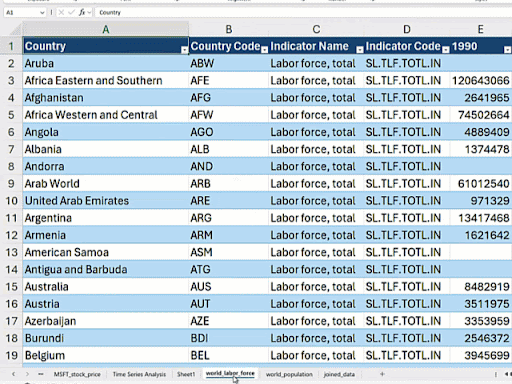
For instance, you can use Python code to easily join two complex datasets, right within Excel.
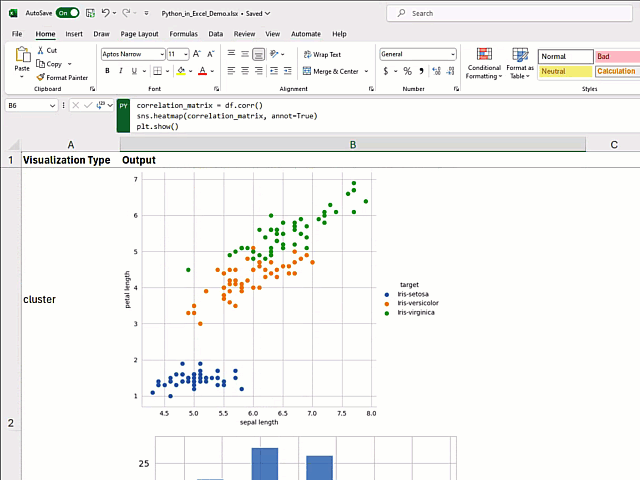
Leverage robust Python visualization libraries, such as Matplotlib and Seaborn, right in your Excel workbook for comprehensive data representation.
Elevate your analysis using Python’s powerful libraries such as pandas and statsmodels. Accomplish comprehensive statistical tasks directly within your Excel cells. You don’t need to be a data science expert—Anaconda’s curated Python libraries embedded in Excel make advanced analytics accessible to everyone.
This feature doesn’t just bring Python into Excel; it brings the rich ecosystem of Python libraries as well. Libraries like pandas for data manipulation, statsmodels for advanced statistical modeling, and Matplotlib and Seaborn for data visualization are all available in Excel, unlocking a universe of new possibilities for your spreadsheets.